Case Status vs. DocketBreeze: An Honest Comparison
DocketBreeze launched in 2026 to solve the same problem for a different audience; the solo practitioner and small firm...
Case Status was one of the first companies to address an obvious problem: clients of law firms are kept in the dark about their own cases. The platform, founded in 2015, built a real business around solving that. Today it serves personal injury and mass-tort firms across the country, and the product is genuinely good at what it does.
DocketBreeze launched in 2026 to solve the same problem for a different audience; the solo practitioner and small firm, at a different price point. This post explains where the two platforms overlap and where they diverge, based on each company's own public materials.
Where They Overlap
Both platforms give law firms a branded, white-labeled client portal. Both centralize client communication. Both send automated updates and reminders. Both integrate with the major practice management systems (Clio, MyCase, Filevine). Both track engagement, automate review and referral requests, and offer mobile access for clients.
If your firm's main need is “keep my clients informed of case progress without my paralegal making a hundred calls a week,” either platform will move the needle.
Where They Diverge
Case Status emphasizes client sentiment. Their AI focuses on “Client Intelligence”, predictive NPS, urgency triage, and sentiment summaries across cases. The pitch is built around scaling client experience for medium and larger firms looking to grow through reviews and referrals.
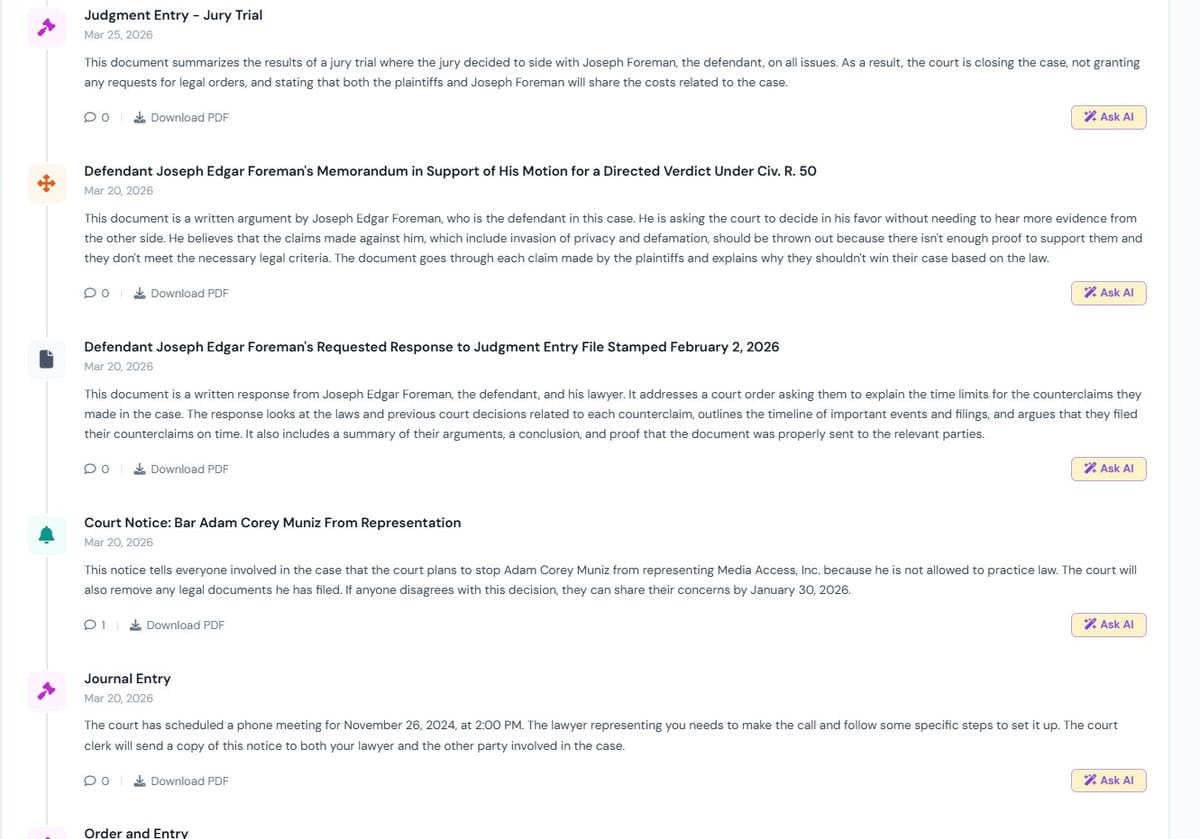
DocketBreeze emphasizes the case file itself. Every court filing entering the system is automatically translated into two summaries; one legal, and one in plain language for the client. Deadlines and tasks are extracted from filings the moment they arrive. The AI is trained on the actual case documents, so when a client asks “what does this motion mean,” it answers from their specific file with citations to the specific paragraph.
Neither platform is wrong about its focus. They're solving adjacent problems for different buyers.
The Pricing Question
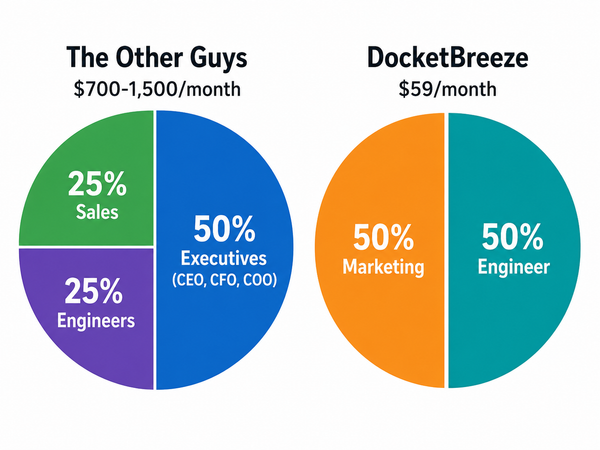
Case Status doesn't publish final pricing on its website. Third-party software listings reference a starting price well over $800/user/month for a basic tier, but firms researching the platform consistently report that their actual quoted cost, once required tiers, AI features, and per-case allotments are factored in, lands far higher, closer to $1,500. One Capterra reviewer described the platform as “pricey.”
DocketBreeze publishes its full pricing publicly. $59 per attorney per month month-to-month, or $49 per attorney per month paid annually. Volume discounts apply as more attorneys are added. Every feature is included. There is no premium tier, no AI add-on, no per-case fees.
Which One Is Right For You
If you're a 20-attorney personal injury firm with a marketing department and a focus on client review generation, Case Status is genuinely well-suited to that. If you're a solo practitioner or small firm where the lawyer is also the rainmaker, the case manager, and the person reading every motion at 9 p.m., DocketBreeze was built specifically for that role, and priced for it.
DocketBreeze offers a 30-day free trial with no credit card. The fastest way to compare is to load documents from one of your real cases and see what each platform does with them.