The Calendar Inversion: From Authoring to Auditing
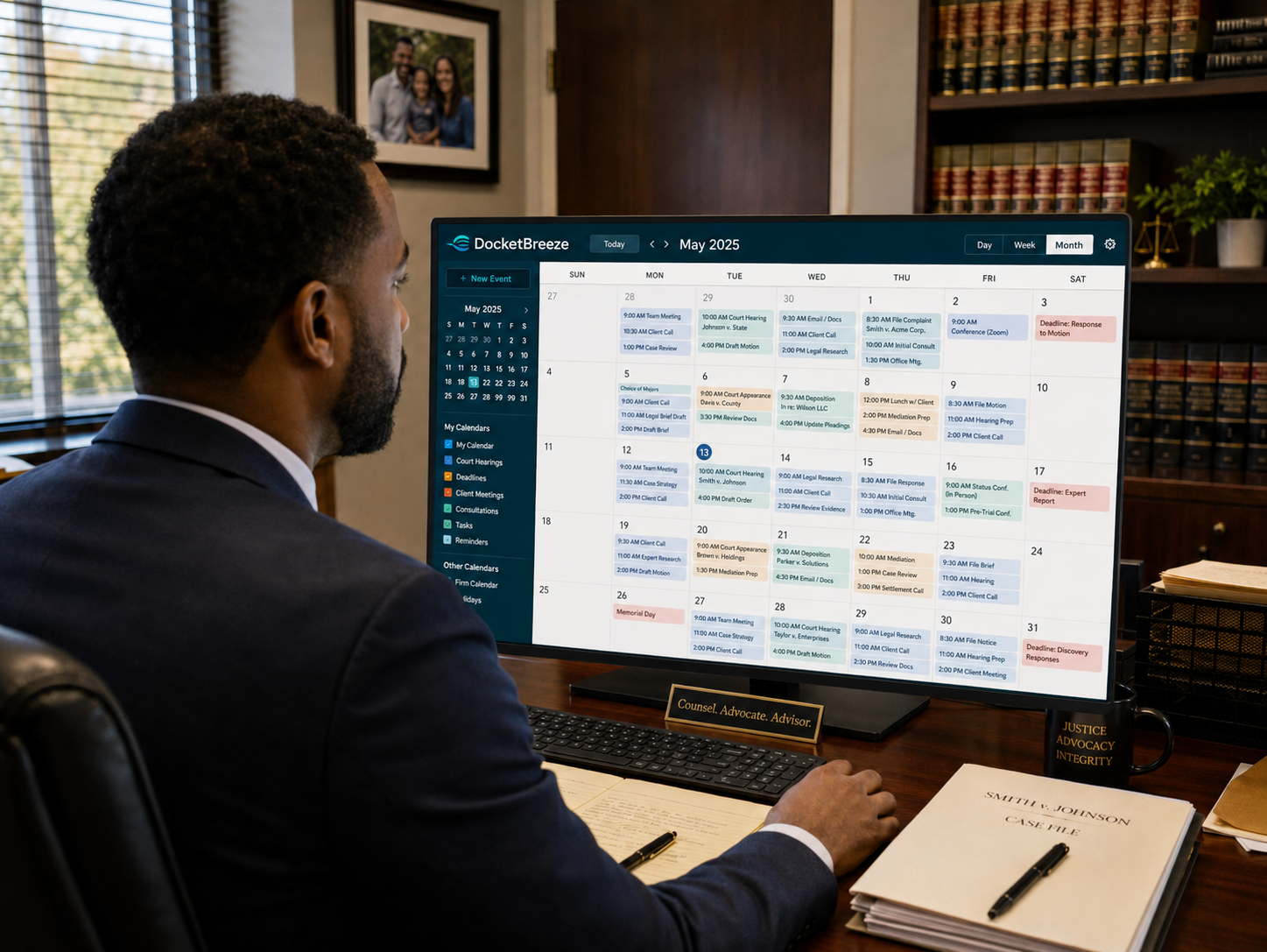
Every filing entering the system gets read by DocketBreeze AI, which is trained to identify deadlines, hearings, conferences, and computed dates. Each one becomes a calendar entry automatically, with one-click sync to Google or Outlook.
There are two ways to manage a legal calendar, and the difference between them turns out to matter more than almost any other choice in the day-to-day mechanics of legal practice.
The first way is authoring. The lawyer reads each filing, identifies each deadline, performs each computation, and enters each date into the calendar by hand. This is how every solo practitioner has historically managed deadlines, and it's how most still do.
The second way is auditing. The deadlines are extracted automatically from each filing as it enters the system. The lawyer's role is to look at a populated calendar and confirm it.
These sound similar. They are not.
Why Authoring Fails
Authoring depends on perfect attention. The lawyer has to read every filing, recognize every triggering event, do every date computation correctly, and remember to enter every result. Each step is a place to fail. And the failures aren't randomly distributed; they cluster at exactly the times when the lawyer is most likely to be tired, distracted, or rushed. End of a long day. Friday afternoon before a vacation. The week the family situation flared up.
This is not a character defect. It's how human attention works. Sustained perfect attention is not a thing humans actually have. So a system that requires it from a single person, with no backup, as in solo practice, fails at exactly the moments it can least afford to.
This is why missed deadlines are the largest source of legal malpractice claims. The system was always designed to depend on something humans can't reliably provide.
Why Auditing Survives the Tired Day
Auditing requires looking at a list of deadlines that have already been extracted, and confirming that they look right. This is a fundamentally different task. It doesn't require the lawyer to find anything; it requires the lawyer to recognize whether what's there is correct.
Recognition is much more robust to fatigue than discovery. A tired lawyer looking at a list of fifteen extracted deadlines will probably notice if one is wrong or missing. The same tired lawyer reading a 17-page order at 6 p.m., trying to find every deadline, will probably miss something.
The shift from authoring to auditing inverts the failure mode. The system survives the tired afternoon because the difficult work, finding the deadlines, has already been done.
How DocketBreeze Implements This
Every filing entering the system gets read by DocketBreeze AI, which is trained to identify deadlines, hearings, conferences, and computed dates. Each one becomes a calendar entry automatically, with one-click sync to Google or Outlook. The lawyer's role shifts from finding the deadlines to confirming that the extracted set looks right.
In practice, this turns a 30-minute calendar review per filing into a 30-second review of an extracted list. More importantly, it turns a workflow that depended on perfect attention into one that depends on recognizing whether a list is reasonable, a much lower bar.
The Underlying Idea
Most legal-tech features promise to save time. The calendar inversion does that, but the more important change is qualitative. It moves the most consequential task in solo practice, not missing deadlines, from a system that requires the lawyer to be perfect, to a system that requires the lawyer to be reasonable. The first is unattainable. The second is something a human can actually do.