Client Confusion Is a Malpractice Risk in Disguise
“My lawyer never told me” is the most expensive sentence in legal practice.
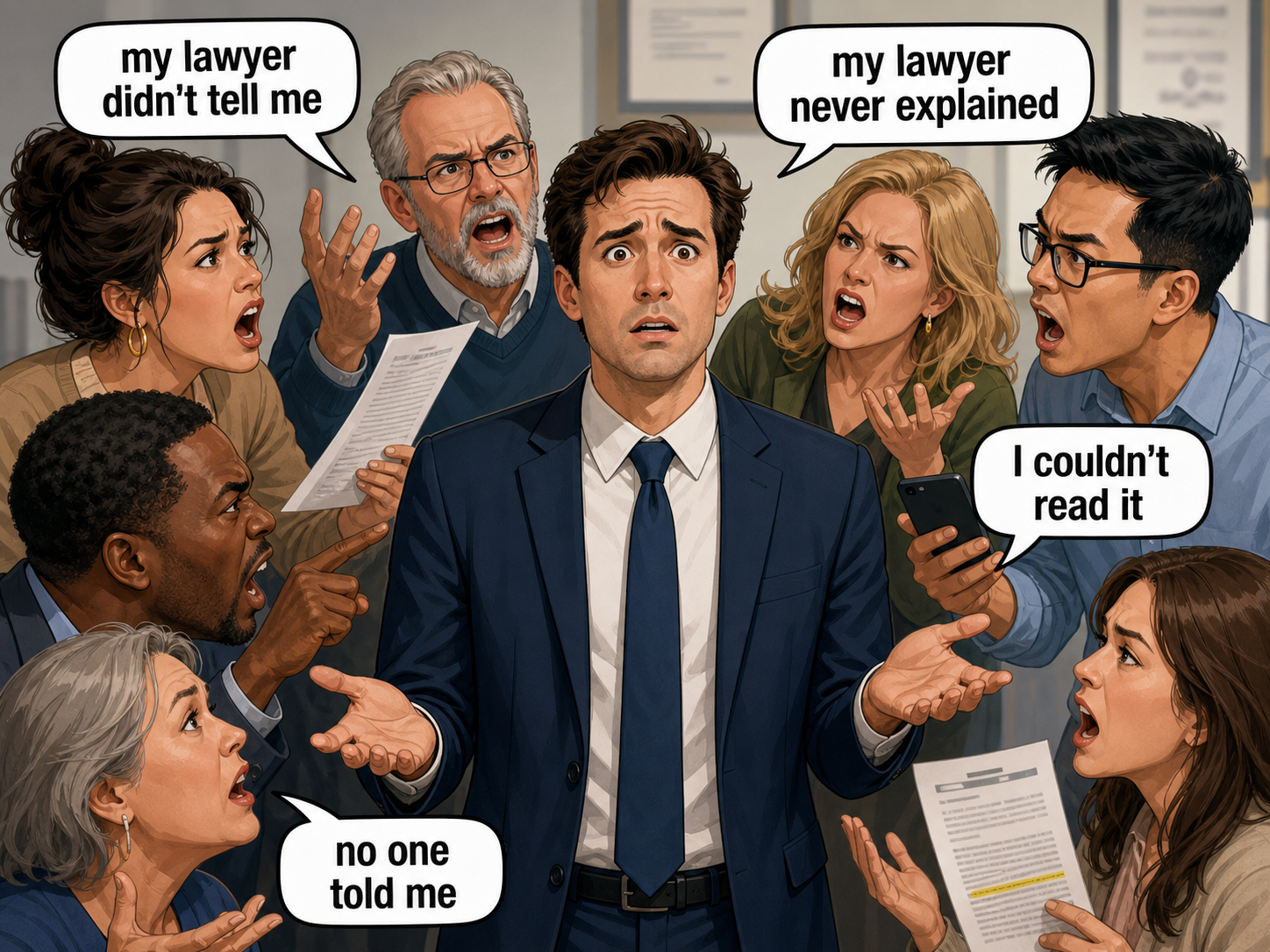
Every malpractice carrier in the country tracks the same data, and the data tells the same story year after year. The most common allegation in a paid malpractice claim is not that the lawyer made a substantive error of law. It's that the lawyer failed to communicate adequately with the client.
That category absorbs an enormous range of facts. “My lawyer never told me about the deadline.” “My lawyer never explained that decision.” “My lawyer didn't keep me informed.” In a non-trivial percentage of these claims, the lawyer did communicate; by email, by phone, sometimes repeatedly. The client just didn't understand.
Confusion looks identical to silence in retrospect. From the client's chair, both feel like “my lawyer didn't tell me.”
The Mechanics of How This Becomes a Claim
A client receives a court order by email. They open the PDF, read three paragraphs, get lost in the legal language, close the document. They don't call. The lawyer assumes silence equals comprehension and moves on.
Three months later, a deadline passes that depended on the client doing something the order required of them. The case is damaged. The client claims they didn't know. The email exists. The PDF was opened. The lawyer's defense is “I sent it, so they had notice.” The client's claim is “I couldn't read it.”
The carrier's view: the lawyer had a duty to communicate in a way the client could actually understand. The fact that the document was sent doesn't, by itself, demonstrate that duty was met.
Two Defenses, Both Imperfect
The traditional defenses are: send a follow-up email summarizing the order in plain language, or call the client to walk through it. Both work. Both also take time — fifteen to twenty minutes per significant filing — and across thirty active cases, the math gets impossible. So most lawyers do it for the high-stakes filings and skip it for the rest. The skipped ones are where the claims come from.
A Better Defense, At Scale
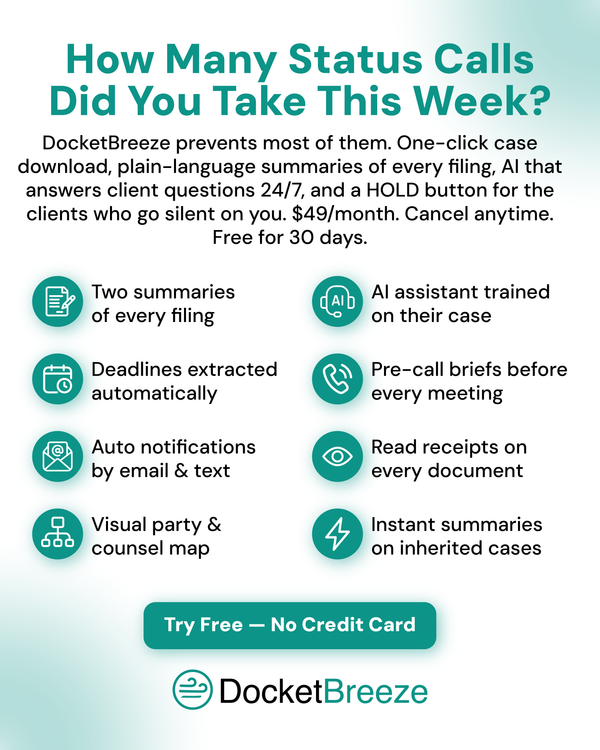
DocketBreeze translates every filing into plain language automatically. The client receives the order along with a written summary explaining what the filing is, what it means for them, and whether they need to act. They open both. The plain-language version is two paragraphs they can actually read.
Two things follow. First, comprehension goes up significantly; the client actually understands what's happening in the case, not just receives notice that something happened. Second, the platform logs that the client opened the document, how long they spent on it, and whether they asked the AI a question about it. The communication isn't just sent, it's documented as received and engaged with.
If a malpractice claim ever does surface, the record is decisive. The client received the filing. They received a plain-language summary. They opened both. They engaged with the content. The lawyer's communication duty was demonstrably met.
“My lawyer never told me” is the most expensive sentence in legal practice. DocketBreeze is structured to make sure it can't be said.