Hona vs. DocketBreeze: A Feature-by-Feature Breakdown
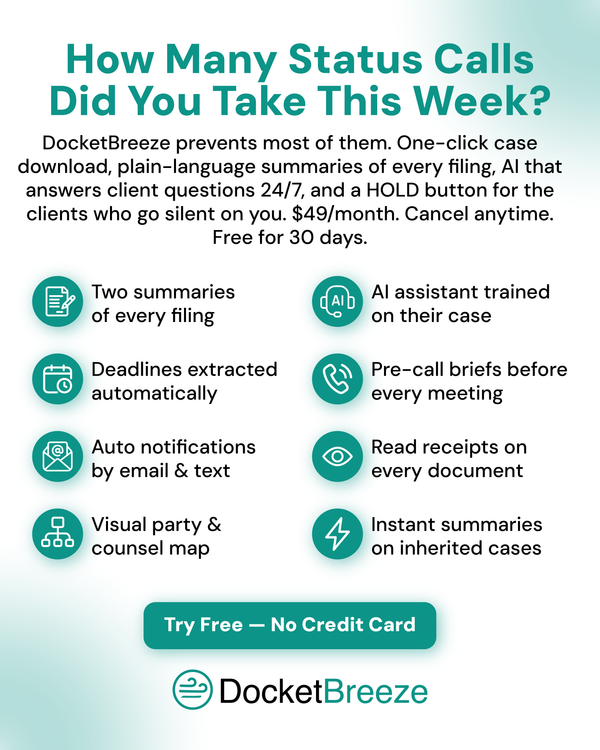
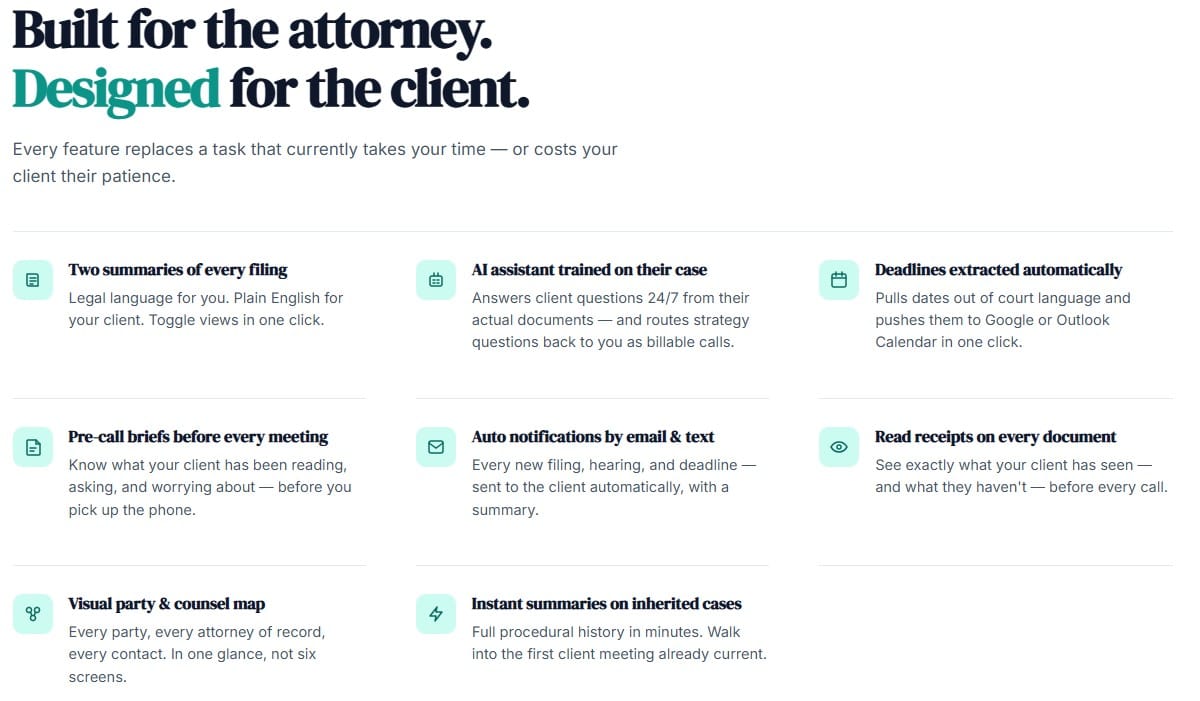
With DocketBreeze... every filing; motion, order, discovery exchange, gets a plain-language summary the moment it arrives.
Hona, originally launched as Milestones, has built a strong reputation in the personal injury and mass-tort space. The pitch is direct: let your clients track their case the way they track a Domino's pizza. For firms with high volume and a process that breaks neatly into phases, the metaphor works.
DocketBreeze approaches the same problem from a different angle. Where Hona is built around the idea of phases (“you are now in discovery”), DocketBreeze is built around the idea of documents (“here is what this specific filing means for your case”). Both reduce status calls. They reduce them differently.
Where They Overlap
Both platforms offer a branded client portal. Both send automated text and email updates. Both reduce inbound status calls significantly. Both can integrate with Clio, MyCase, Filevine, and the other major case management systems. Both white-label so the client sees the firm's brand, not the software vendor's.
If your firm runs predictable, repeatable case types, personal injury especially, either platform will help.
Where They Diverge
Hona is built around case phases. Hona's core mechanism is the visual timeline of phases the firm defines: intake, demand, negotiation, settlement, etc. When the case moves to a new phase, the client gets a notification and a video explainer. It's effective for case types where the phases are well-defined and similar across clients.
DocketBreeze is built around the case file. Every individual filing; motion, order, discovery exchange, gets a plain-language summary the moment it arrives. The timeline isn't a fixed set of phases the firm defines once; it's a chronological view of every document in the actual case, with summaries on each. For litigation that doesn't fit a clean template; contract disputes, family law, estate matters, the document-level approach handles the variability.
Hona's AI is a 24/7 receptionist. Hona offers an AI receptionist for intake and a chatbot for client questions. Useful, especially for after-hours lead capture.
DocketBreeze's AI is trained on the case file. When a DocketBreeze client asks “what's my next deadline” or “did the other side admit fault,” the AI answers from their actual filings, with citations to the specific paragraph. Different problem, different answer.
The Pricing Question
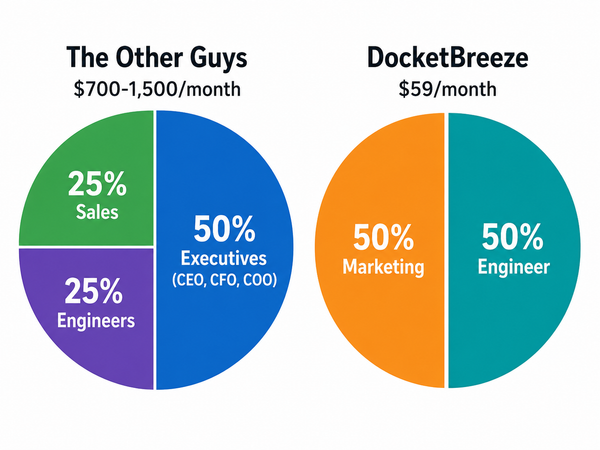
Hona doesn't publish pricing on its website — every plan requires a sales demo. Public references and third-party software directories suggest pricing in line with other enterprise client-experience platforms in the legal space, structured per case or per attorney depending on firm size. Whatever the price is, and the only lawyers who actually know are those who are willing to sit through demonstrations and answer a list of questions, Hona can't be too proud of it because publicly posting the price to potential clients is not something they do.
DocketBreeze publishes pricing openly: $59 per attorney per month month-to-month, $49 per attorney per month paid annually, with volume discounts. Every feature is included for every client.
Which One Is Right For You
If you run a high-volume personal injury or mass-tort practice with well-defined case phases, Hona's phase-driven model fits the work. If your practice spans varied litigation where each case is its own thing, and where the documents themselves are what clients need help understanding, DocketBreeze was built for that.
DocketBreeze's 30-day free trial requires no credit card. Load filings from one of your real cases, one document at a time or just drop in a zip file and see how the document-level approach feels. Within minutes every document is identified, summarized, placed in a chronological timeline, and every contact pulled, saving hours of work for the paralegal or attorney.