Instant Case Briefs: How to Hand Off a Case in Under a Minute
Solo practitioners don't have a senior partner to lean on for case context. The DocketBreeze instant brief provides that kind of structural support — without requiring you to interrupt anyone or delay your own work to get it.

Try this thought experiment. You're going to be unreachable for a week starting Friday. A colleague has agreed to cover your active matters. How long will the handoff meetings take?
If you're a typical solo or small-firm lawyer, the answer is: longer than the vacation is worth. An hour per case, at minimum. More if any of them have something pending. By the time you've briefed your colleague on five active matters, you've burned a full afternoon, and the colleague has notes from the meeting that will be 70% useless by Monday.
This is one reason solo practitioners rarely take real vacations. The cost of the handoff is too high.
Why Handoffs Take So Long
A handoff meeting is, structurally, a translation from one person's working memory to another person's working memory. The lawyer covering the case has to absorb: who the parties are, what's been filed, what's pending, what the strategy is, what the next deadlines are, what the client is like, and what's coming up that needs attention.
None of that information is hard to find. It's all in the case file. The reason the meeting exists is that the case file isn't organized in a way that someone unfamiliar with it can absorb quickly. The covering lawyer would have to spend two hours reading filings to get to where you can take them in fifteen minutes by talking.
Instant Case Briefs Invert the Problem
DocketBreeze generates a case brief on demand. One click and it produces a summary of the entire case; procedural posture, parties, key filings, current status, what's pending, what the recommended next steps are based on the most recent activity. It draws from the actual documents in the file, not a general legal glossary, so the citations are specific.
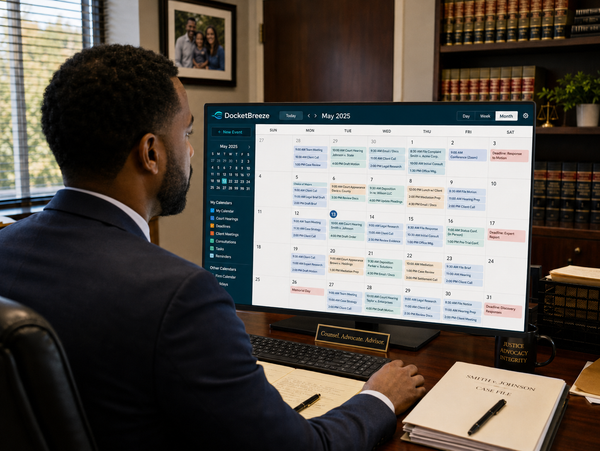
The covering lawyer opens the platform, reads the brief in under a minute, and is now where a one-hour handoff meeting would have left them. Every pending task is visible. Every upcoming deadline is on the calendar. Every recent client question, logged through the AI assistant, is searchable.
The handoff doesn't happen in a meeting. It happens in the DocketBreeze platform.
This Isn't Just About Vacations
The use cases stack up quickly once the brief feature exists. Inheriting a case from another attorney. Onboarding new staff. Coming back to a matter that's been dormant. Briefing co-counsel mid-case. Preparing for a hearing in a matter you haven't touched in months.
All of these are situations where the bottleneck has historically been the time it takes a human to read into the file. The brief eliminates the bottleneck. Five minutes of preparation, instead of two hours.
Solo practitioners don't have a senior partner to lean on for case context. The DocketBreeze instant brief provides that kind of structural support — without requiring you to interrupt anyone or delay your own work to get it.
Take the vacation.