When Clients Go Silent: A Solo Practitioner’s Survival Guide
DocketBreeze gives small firms the same documented, professional escalation a large firm would deploy through a docket clerk and a paralegal. One click. One record. One less paralysis.
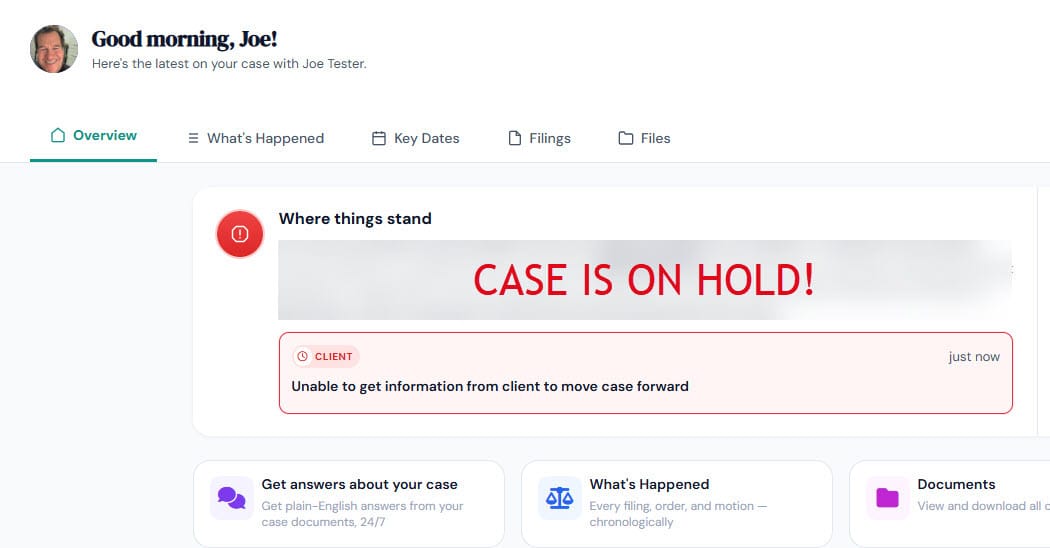
Every solo practitioner has had this client. They retained eagerly. They returned the engagement letter the next day. And then, silence. You need a signature. A document. A piece of information. Something the case can't move forward without. You email. You text. You call. Nothing.
The case isn't paralyzed by anything you did. It's paralyzed by the absence of a response from someone who hired you to make their case move.
The Three Risks of the Silent Client
First, the deadline approaches. If you can't get what you need, you may have to file what you can without it. Or you miss the window. Either way, the lawyer's diligence becomes the lawyer's exposure.
Second, the client re-emerges and claims they didn't know. “My lawyer never told me about the deadline.” “I never got that email.” Without a documented record of every attempt, the client's version is the only version.
Third, the lawyer chases. And chases. And chases. Each unanswered call is two minutes of unbillable time. The cumulative chase, across a year of silent clients, runs into days.
What Solo Practitioners Have Historically Done
The traditional approach is some combination of: send another email. Text again. Leave another voicemail. Send a certified letter. Send a formal withdrawal letter, which itself raises ethical questions and procedural complications. Hope the client surfaces.
It mostly works. Eventually. After a lot of time spent, and with the documentation scattered across four different communication channels, none of which integrates with the case file.
A Better Tool for the Same Problem
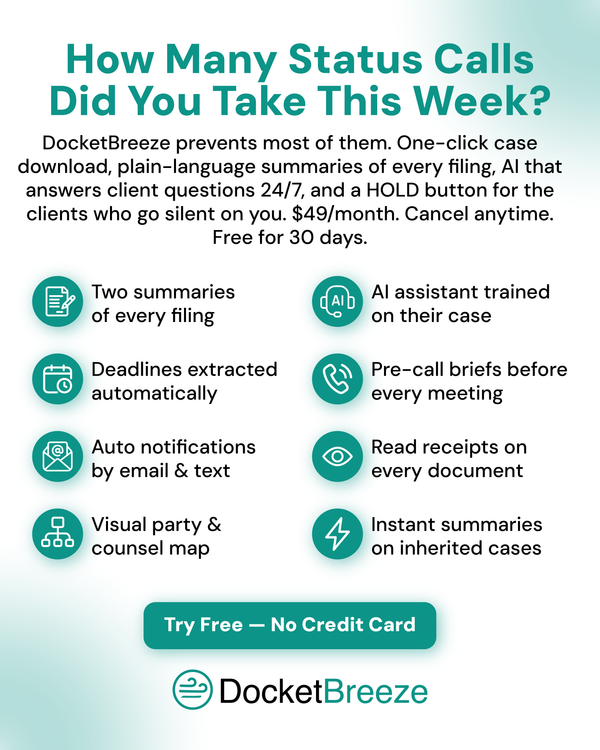
DocketBreeze provides a HOLD button. One click sends a formal notice to the client, by email and text simultaneously, that the case is on hold pending the missing item. The notice explains what's needed, why the case can't move forward, and what happens if they don't respond by a specified date. It's logged in the case file with delivery confirmation. It is, in effect, a structured demand.
The HOLD button does three things at once. It creates a written record of the lawyer's diligence, invaluable later, in a fee dispute or a malpractice claim. It escalates in a tone that's professional rather than pleading. And it often actually works: a client who has ignored five informal messages will respond to one formal one, because the formality conveys that the situation has changed.
If the client still doesn't respond, the lawyer has the strongest possible documentation of diligence. If they do respond, the case moves. Either outcome is better than the lawyer continuing to chase.
The Underlying Principle
Silent clients are not a personal failure on the part of the lawyer. They are a structural feature of legal practice. The lawyer's job isn't to prevent them — it's to handle them in a way that protects the case, protects the firm, and respects the lawyer's time.
DocketBreeze gives small firms the same documented, professional escalation a large firm would deploy through a docket clerk and a paralegal. One click. One record. One less paralysis.