Why Most Missed Deadlines Aren’t the Ones You’d Expect
The obvious deadlines; the trial date, the response to the complaint, the dispositive motion cutoff, are not, statistically, the ones that get missed. They're on the front page of the order.
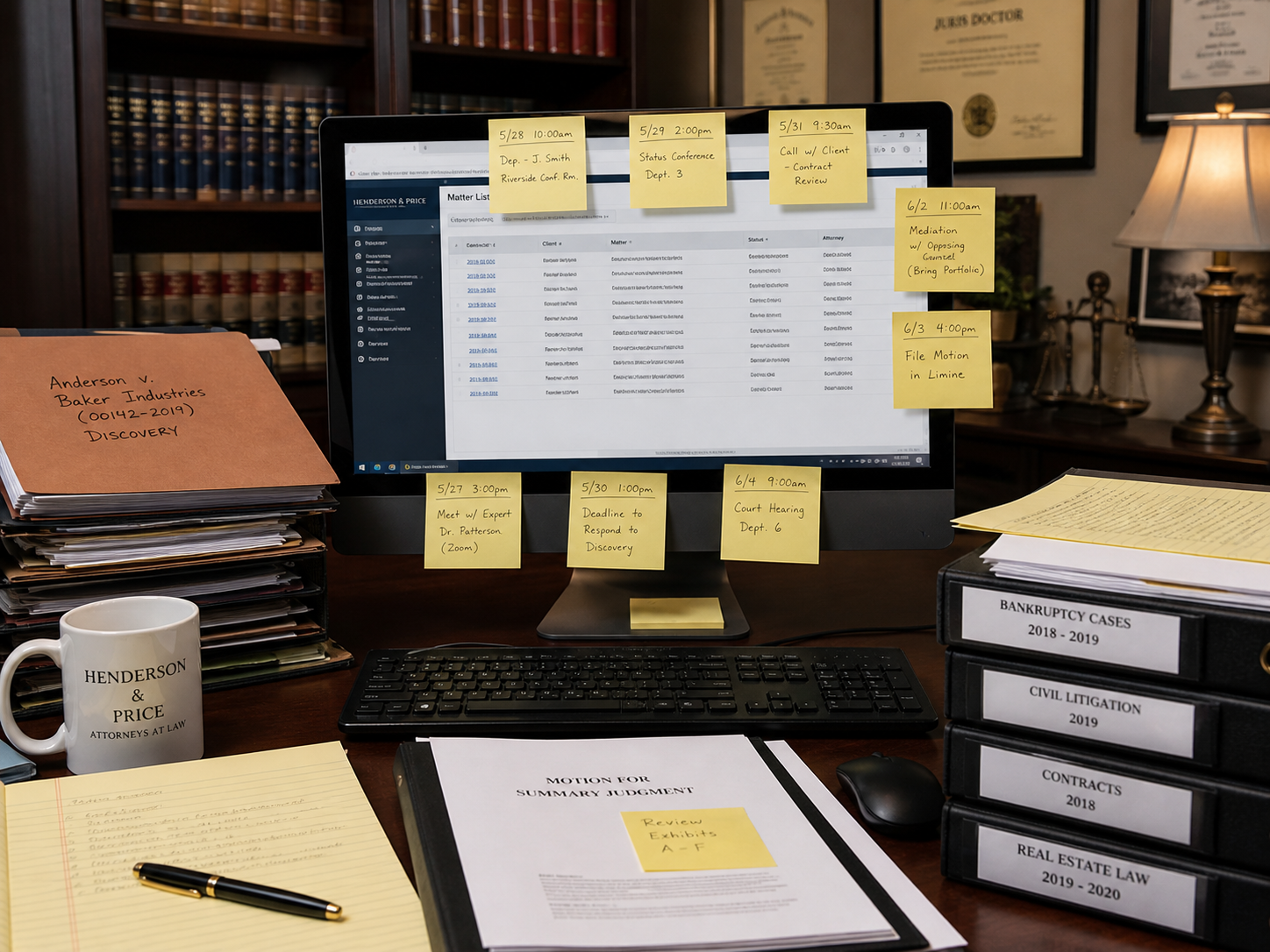
If you ask any malpractice carrier what costs them the most money, the answer is the same across every state, every practice area, every size of firm: missed deadlines. Year after year, decade after decade. The number-one source of paid claims.
And if you ask the lawyers who missed those deadlines what happened, the answers cluster around a single observation: it wasn't the deadline they were watching for.
The Deadlines That Get Missed
The obvious deadlines; the trial date, the response to the complaint, the dispositive motion cutoff, are not, statistically, the ones that get missed. They're on the front page of the order. The lawyer enters them when the case opens. The client knows about them. Three different people are watching them.
The deadlines that get missed are the ones that meet at least one of the following criteria:
Buried in the body of the document. The order grants the motion to dismiss in part. Paragraph 14, on page 9, says the plaintiff has thirty days to amend on the surviving counts. Easy to skim past. Easy to assume someone else caught it.
Expressed as a computation. “Within thirty days of service” requires someone to know when service occurred, do the math, and enter the result. The math is simple. The system depends on it being done. When it isn't, the deadline doesn't exist on anyone's calendar.
Set by a footnote or attached order. The main filing is unremarkable. Footnote 3, or the attached scheduling order, sets a deadline that nothing in the body of the document references.
Created by a routine event you didn't recognize as a trigger. Discovery responses are due thirty days after service. Service occurred two Mondays ago. Did the system register that as a trigger? Often not.
Why Manual Calendaring Fails Here
Every traditional defense against missed deadlines depends on a human being reading every filing, recognizing every deadline, performing every computation, and entering every date. Each step is a place to fail. And in a small firm, where the lawyer is also reviewing the filing in the first instance, the failure point and the safety net are the same person.
Practice management software helps, but only after the deadline is in the system. Getting it into the system is still a human task.
Automatic Extraction Inverts the Problem
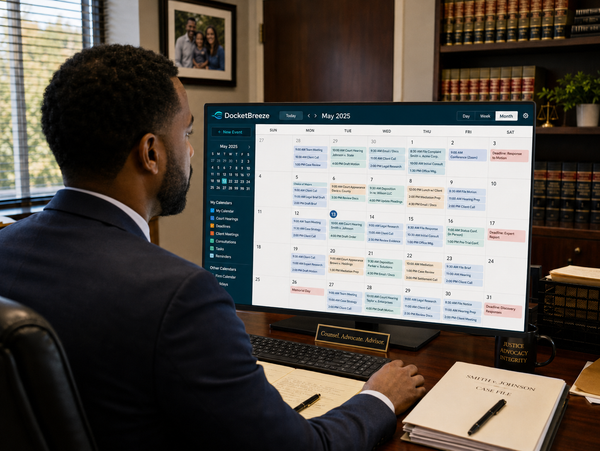
DocketBreeze extracts deadlines from court documents the moment they enter the system; every date, every computed date, every triggering event. They appear on the calendar automatically, with one-click sync to Google or Outlook. The lawyer's role shifts from authoring the calendar to auditing it.
The difference matters. Authoring requires sustained perfect attention. Auditing requires looking at a populated list and confirming it. The first depends on the lawyer never having a tired afternoon. The second survives the tired afternoon.
For solo practitioners and small firms — where there is no docket clerk and no second pair of eyes — this isn't a productivity feature. It's a malpractice firewall.