Why Your Clients Don’t Understand Their Own Case (And Why That’s a Problem)
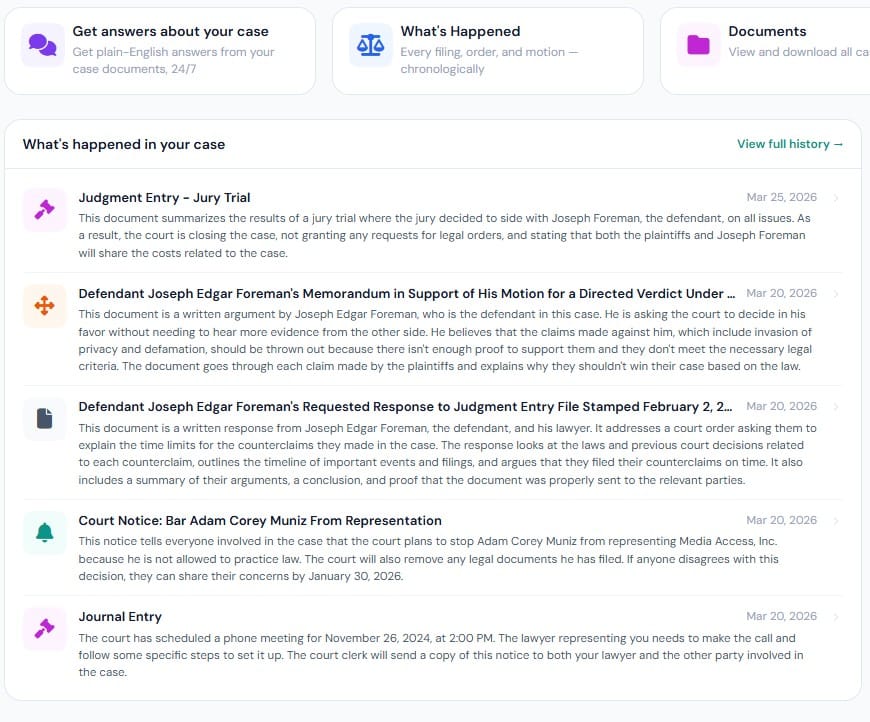
Every filing entering a case is summarized twice the moment it arrives; once for the attorney with rule references and procedural posture, and once for the client in plain English..
There's a quiet assumption built into how most law firms communicate: send the client a copy of the filing, and they’ll read it. Maybe they’ll have a question. Mostly, they’ll be fine.
They will not be fine. They will open the PDF, read three paragraphs of “comes now the defendant, by and through undersigned counsel,” close the document, and call you to ask what it means.
This isn't a failure of the client. It's a failure of the medium.
Legal Documents Are Written for Other Lawyers
A motion to dismiss, a discovery request, a court order; all these are written by lawyers for other lawyers and judges. The vocabulary, the structure, the conventions about what gets stated explicitly and what gets assumed; all of it presupposes years of training. Clients don't have that training. They have a problem in their life that the law somehow attached itself to, and now they're getting documents written in a language they didn't sign up to learn.
Telling a client “it's a motion in limine to exclude expert testimony under Daubert” is functionally equivalent to telling them nothing. They will nod. They will then call back in three days asking what's going on with their case.
The Cost Is Hidden in Three Places
It hides in the inbox. Clients who don't understand the filings call, email, and text, not because they're high-maintenance but because they have no other option. Each of those touches is unbillable time, paid for by you.
It hides in the reviews. A client who didn't understand what their lawyer was doing won't write that the lawyer was bad. They'll write that they “never knew what was happening,” which reads, to a prospective client, like exactly the same thing.
It hides in the referrals you don't get. A confused client, even a successful one, can't explain to a friend what their lawyer did. “She handled it” doesn't generate referrals. “When the other side delayed things, she filed a motion to compel and got us back on track in two weeks” does. That kind of fluency requires understanding.
The Fix Is Translation
The lawyer doesn't need to spend twenty minutes per filing translating it into plain English. That's not a sustainable use of an attorney's time, and it's why most firms simply don't.
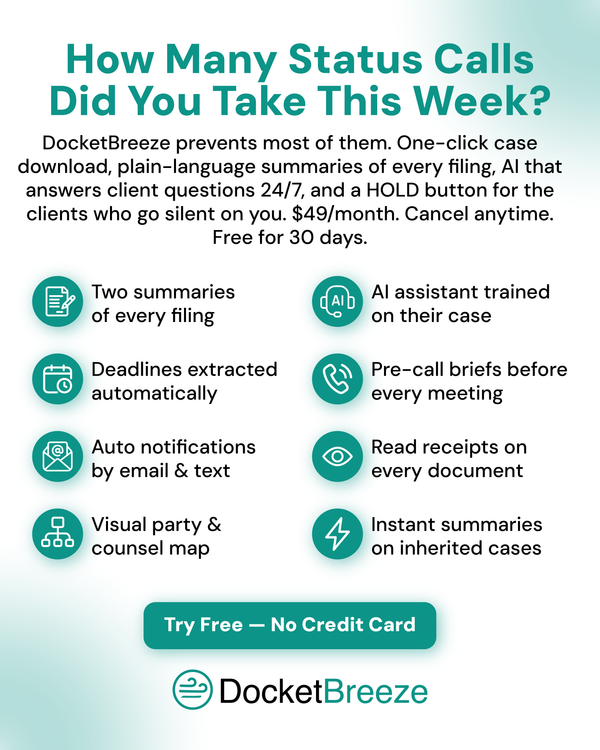
DocketBreeze does it automatically. Every filing entering a case is summarized twice the moment it arrives; once for the attorney with rule references and procedural posture, and once for the client in plain English explaining what happened, what it means for them, and whether they need to do anything. The original document stays untouched. The translation sits on top, like a doorway.
Clients who would have called you instead read the summary, understand the situation, and stay engaged. The unbillable hour you would have spent doesn't happen. And six months later, when their friend mentions a legal problem, your client actually remembers what you did.